Monday, January 26, 2015

Cycling is all about numbers and they can tell what we need to know about the future

Cycling is all about numbers and they can tell what we need to know about the future
By:  Michael Lander

Memphis has seen a steady increase in the number of cyclists over the last
decade and this is only expected to grow as more amenities and facilities
are put into place in and around the city.

There is an old saying that numbers don't lie.  Some say that numbers can even speak louder than words.

Because of numbers, much of what we know of the world can be explained and understood.  It is through them, and more specifically, statistics, that we might even be able to get a glimpse into the future.

Cycling, like many other sport or athletic activities can be all about numbers, speed, distances, and averages, etc., and it's future may very well lie in what we do with the statistics that we have in front of us today.

By looking at those who now ride, from men, women, children, and people of different races, economic status, and geographical location, we can get a pretty clear picture as to the trends and what direction and where cycling might be going in.
 
Much of what we know about this comes from polls, surveys, retail sales and other means of data collection.  This can give businesses, private and public organizations, and local, state, and federal governments an opportunity to make decisions and allocate resources for things like a cycling infrastructure that will improve and enhance the lives of those in a community.

It may come as little surprise to anyone who is into cycling, that men comprise the largest group of those who currently ride.  The most significant growth of cyclists in the U.S., over the past two decades, have been men, especially those between the ages of
25-64 years of age.  The average North American bicycle commuter is also a 39-year-old professional male.
 
Men make up the largest population of cyclists across the U.S. and many do not
seem to be apprehensive about riding on busy city streets and are more likely to
commute than any other segment in the population.

There may be many reasons why men chose to ride a bike more often than women do, but one of the more prevalent explanations for this may simply come down to the issue of
personal safety with more men seemingly less concerned about this than women who were surveyed about it would appear to be.

As for men,
age does seem to be a factor for those who do ride.  The largest group of cyclists, at 43 percent, are those who are in between the ages of 25 to 44.  This is followed by those who are 45 to 64, at about 33 percent, with 15 percent of those from 18 to 24 who ride and then 10 percent for those who do who are 65 years of age and older. 

This data seems to correlate with times in our lives when most of us are typically more physically active, but perhaps too busy with school, beginning careers, and starting families to be interested in spending as much time on a bike.

For women in the U.S., about 10.2 million rode 109 days or less in 2010, which was a
decrease of 13 percent since 2000.   This drop does not seem to parallel what is happening in other places around the world, such as in many countries throughout Europe, where there are as many women bicyclists as men. 

According to surveys, a majority of women indicated a preference
to riding on bike trails and on less congested city streets out of
concerns for their personal safety.

Studies that have been conducted seem to suggest that more women in the U.S. might be enticed to ride if they have bike trails or if they had the option to ride on streets where there is
less vehicular traffic or where special traffic-calming features are in place to help minimize the risks to cyclists.

Even though riding a bike was once a really big part of childhood in the U.S., it does not appear that it is that way today.  The number of
children who ride bicycles has declined more than 20 percent between 2000 to 2010. 

Some of this decline may be attributed to safety concerns by parents who are not comfortable with allowing their kids to ride alone in their neighborhoods as they once did.  It may also be that children today have more things that they can do both in and out of the home that may compete for any time that they could devote to riding a bike.

When it comes to the issue of race, one of the most positive developments is that
cycling is becoming increasingly more diversified.  While bicycling may be highest among whites and Hispanics, between 2001 to 2009, cycling rates rose fastest among blacks, Hispanics, and those of Asian descent.  In North America, these three groups accounted for an increase of all bike trips, rising from 16 percent in 2001 to 21 percent in 2009.

The number of children who ride a bike has steadily decreased by at least
20 percent from 2000 to 2010, but this decrease has been offset by an
increase of adult men who have taken up cycling.

While race has become less of factor as far as those who ride, the reasons behind why they do it may be different.  For whites, bicycles would appear to be mostly used for
exercise and recreation whereas other groups may ride for more practical purposes like commuting to and from school or work. 

This also seems to parallel what occurs with various income levels.   Bicycling rates do not seem to vary much when it comes to income level, but the purposes appear do as those with lower income typically ride more for
utilitarian purposes and those with higher income seem to ride more for fitness and leisure.    The same seems to also be true for children from low-income and minority households who are more likely to ride to school than whites or those are from higher income households.

In addition to all of the variables that might influence who rides and how, the location of where someone lives also seems to be a factor as well.  In the U.S.,
western states would have the highest bicycling rates and southern states currently have extremely low levels when compared to all other regions throughout of the country.

Some of the more positive trends in cycling is how it is growing in popularity throughout the most of the U.S.  The number of Americans who ride today is
greater than all of those who ski, golf, and play tennis combined and more adults participate in bicycling than in any other outdoor sport.  

When compared to other age groups, individuals of college age, between 18 to 24,
make up one of the smaller groups who are inclined to ride a bike.
 
They also take more bike trips than trips for all types of motorized outdoor sports put together.  Between 2006 to 2011, only 12 sports had a positive move toward increased participation and bicycling was one of them.

On the other side of the coin, there are some negative aspects of cycling that currently deter some people from riding.  The
costs of purchasing a bike was given as a major obstacle by some who have been surveyed as was a lack of a bike-specific infrastructure and pro-bicycle programs with supportive land use planning and restrictions on automobile use.
 
Even though some southern cities have been slow to warm up to the idea of providing cycling-related amenities, Memphis has been one of the leaders in coming around and changing all this.

In 1966, Joyce Carol Oates had a short story published entitled, "Where Are You Going, Where Have You Been?"  It is a story that chronicles the odyssey of a young girl who is lured away from her home to an uncertain future.  Even though this fictional tale really has nothing to do with cycling itself, in some ways it's title arguably could.

The question of where you are going and where you have been, as it relates to cycling, is one that cities like Memphis have looked at and answered themselves. 

When it comes to cycling, over the last decade, it is obvious, even to the most casual observer, where Memphis has come from, where it is now, and where it is going in the future
.
  
 
Statistics indicate that cycling is becoming increasingly diversified and, not unlike
any other large metropolitan city in the country, cyclists of different ages, races,
and varying economic backgrounds, etc., can be found in many areas throughout
the City of Memphis.


In less than ten years, the Memphis Metropolitan area has seen a cycling infrastructure that has gone from being non-existent to one that is growing by the day and slowly emerging as a nationally recognized destination for cycling enthusiasts.

With these changes, the number of cyclists has exploded and will likely continue to move in that direction as more is done to draw people out of their homes and on to the burgeoning number of bike lanes, trails, and cyclist-friendly roads.

In the movie "Oh Brother, Where Art Thou?", George Clooney's character becomes angered when he's told that it'd take two weeks before the owner of a small country store would be able to order and receive the hair gel that Clooney's character is asking for.  In response to not being able to get what he wants for another two weeks, he says, "Well ain't this place a geographical oddity!  Two weeks from everywhere!"

While Memphis may not exactly be two weeks from everywhere, one thing that it is quickly becoming is a place known for its cycling.  It is conveniently located in the middle of the country and it is quickly becoming a place that is not only beginning to accept and embrace cycling, but it's where people will eventually want to come to ride from all around the nation.

Time will tell how far Memphis will come with all of this, but at this point, it seems pretty clear in which direction that it is heading in. 

Ultimately, in the end, numbers don't lie and the steady growth in the number of cyclists will speak for itself.   If we will but wait, listen, and act, we should see and hear what should be good news to anyone and everyone who loves cycling.

Tuesday, November 18, 2014

All of Memphis can expect a brighter future ahead with cycling

All of Memphis can expect a brighter future ahead with cycling
By:  Michael Lander

Throughout the year, Memphis has plenty of sunshine with an annual average of
64 percent according to NOAA, which gives Memphis area cyclists, and even some
unicyclists, ample opportunities to be able to ride in the sun.

Sunshine....
Memphis has a lot of it and the city, on average, has 218 days of sunshine every year, but for Memphis area cyclists, it may be the future that's looking even brighter than ever.  For them, it may be time as Timbuk 3's 1986 song says that "The Future's so Bright, I Gotta Wear Shades."

The future most definitely looks bright for cyclists in and around the city of Memphis and there's really a lot to be optimistic about and to look forward to in the years ahead. 

With an ever expanding number of bike lanes and trails, connecting to those that already exist, and the beginning construction of a bike and pedestrian pathway on the
Harahan Bridge over the Mississippi River, cyclists from here and everywhere will be able to ride their bikes in and around many parts of our city within just a very few years from now.

Much of the progress that has already been made in a cycling infrastructure, and the tremendous growth that is expected in the years ahead, can be attributed, much in part, to the mayor and various other city, business, philanthropic, and community leaders.  Together, they have all demonstrated their steadfast commitment to putting the city on the fast track and making it a much more cyclist-friendly place.

The continuing development of a cycling infrastructure throughout the entire city
and beyond will not only provide a greater opportunity for people to ride a bike
for fun, exercise, or to commute, but, in the years ahead it should help to further
unify neighborhoods, communities, and people with one another in a mutually
shared interest in cycling.

In only a very few number of years their efforts have already paid off in a really big way, as the Bicycle/Pedestrian Program Manager,
Kyle Wagenschutz noted in an article that he wrote entitled, "The Demographics of Cycling in Memphis." 

Bicycle use in Memphis, Wagenschutz said, is increasing at the fastest rate of growth compared to any other city in Tennessee and, according to the
League of American Bicyclists, the city is the 14th fastest growing city for bicycle commuting in the U.S. between 1990 to 2013.  This, he contends, is directly correlated to the increase in dedicated bicycle infrastructure and this trend, he says, will likely continue to rise as more is developed.

One of the most positive and encouraging aspects of all this is how many people will benefit from this, not to mention how many tourists will come to the city who will want to ride a bike whenever they come here for a visit.

While some might think that some areas or neighborhoods may benefit from this more than others, Wagenschutz would likely be one of the first to disagree with anyone who believes that.  As he sees it, city officials have a responsibility to consider the equitable development and the well-being of all of its residents.

Even though a disproportionate number of cyclists currently ride either for exercise
or for recreational purposes, as more bike lanes and trails are created, and connected
to existing ones, it should provide a safer and more viable means to consider it as a
way for commuting as well.

The goal for community-wide inclusiveness may not be better demonstrated than with the development of a bicycle infrastructure, which Wagenschutz says is one of the most diverse and truly collaborative efforts that cultivates positive working relationships between local advocates, neighborhood leaders, city officials, private developers, and philanthropic organizations.

Cycling, it would seem, may be one of the best ways to bring a community together for a common good and it can offer health benefits to all Memphians.  It is also something that can offer an alternative way to commute, and it is an activity that can also be done purely for the enjoyment of it.

With all that Memphis already has in the way of cycling, and will have in the years ahead, the future could not look any brighter than it does today.

Saturday, October 18, 2014

Cycling can be addictive, but can have a positive effect on your life

Cycling can be addictive, but can have a positive effect on your life
By:  Michael Lander

After returning to cycling in 2007, I found that it can be tough and challenging, but it
can also can be fun and exhilarating, and even addictive.  It can also take me to places
that I have never been before and it helps me to achieve things that I never thought
were possible, and it always leaves me with the desire to do even more of it.
(Photo Credit:  Steve Dodd)

My heart is pounding.  I'm breathing hard and fast and I feel like I'm sweating bullets.  I'm tired and sore and I thought, long before this, that I wouldn't be able to keep going.

Even with all this, I could not feel any better because I am a cyclist and this is what I live for.

While the experience may sound a lot like torture, or some sort of medical emergency, rather than anything that might be even remotely fun, cycling for me is something that I truly enjoy and have found to be extremely addictive. 

It is a lot like most things that any of us might crave, but it's better and safer for you than many things we might overindulge in, especially any drug. 

People often talk of a "runner's high," but I am convinced that there is also a "cyclist's high."

This sensation doesn't come very easily, however.  You'll probably never experience this, for instance, on a slow, leisurely bike ride, but if you push yourself to your limit, and to a high enough intensity level, and sustain that for a long enough period of time, a cycling "high" is something that, I happen to believe, can be achieved.    

In a Scientific American article by Bethany Brookshire (Scicurious), she says that this "high" or feeling of euphoria may come from the endorphins and endogenous opiods that are naturally released by the body during stress and an intense work-out.  This can set up a series of reactions in the brain that can diminish the sense of pain and help make strenuous physical exercise a lot more pleasurable.

In addition to this, according to a study by Georgia Institute of Technology and the University of California, Irvine, among others, the body may also produce something known as an anandamide.  This cannabinoid, or lipid molecule, is known to create sensations that are similar to those of THC, the psychoactive element in marijuana.

As the body seems to have a way of minimizing the effects of what you may be putting it through, it is never enough to alleviate every ache and pain that you might feel.  Some pain is to be expected.  It would not be normal for your body not to react or to respond in some way as a defense mechanism. 

For those who ride long and hard, they know that this is something that will happen and eventually it is something that you just become accustomed to and can overcome.

Even though pain can be a consequence of riding a bike, it helps to remember that it is almost always only temporary and that there is a lot of truth in the adage of "no pain, no gain."

It might be easy for some non-cyclists to assume that this has anything to do with someone wanting to intentionally inflict discomfort on themselves, but there really is nothing sadomasochistic about any of this. 

For me, it actually has more to do with not letting the pain or discomfort control or deny me of the enjoyment and freedom that I routinely experience on a bike ride.  It is this, and how reinvigorated that I feel after I finish a ride that keeps me, and others like me, going back for more. 

Aside from the physiological and psychological gratification that comes with cycling, what makes it so great is that it seems to offer something for just about everyone.  

Whether you ride just for fun, for a purpose, (commuting to and from places around Memphis), for your health, or to fill a need for speed, or to compete, there are few other sports or activities that can provide so much to so many and to be so good for you.


There are some who might look at those who are really into cycling and see them as being obsessed.  Others might say it's more like an addiction or a compulsion, but whatever label that you want to put on it, I, for one, simply can't imagine a life without it. 

There are certainly worse things that someone could be hooked on and it just so happens that cycling is my drug of choice.  It is an addiction that comes without all the bad side effects that accompany most any drug that you might take.

I have often joked with friends and family that I hate when life gets in the way of my cycling, but in truth, I realize that there is so much more to life than just riding a bike.  For me, though, life can always be enhanced, and made so much better by riding, even if it can leave you tired and sore, and drenched in sweat.

I can tolerate just about anything that happens to me on a ride because, like anyone else who works out, any pain or discomfort that I encounter, in a strange way, is a lot like the title of the John Mellencamp song, (it) "Hurts so good."

The only downside to this is that it doesn't seem to last long and after a couple of days of not riding, I seem to experience withdrawals and need to get my fix and get in a good, long bike ride.  Only this seems to restore any imbalance or lack of equilibrium that I might have in my life.

For those who are like me, cycling is not really the only thing that we have in our lives, but it is something that we are happy to have as a part of it.  It enriches us and keeps us healthy and in touch with the world around us.  There are no drugs, that I know of, that can do all that.  I have no need for them since I have a bicycle. 

With my bike, everything is right in the world.


If you would like to read more about runner's high, which other athletes and cyclists can experience, you may want to read an article entitled, "Yes, Running Can Make You High by Gina Kolata."  For additional information, you can also visit http://en.wikipedia.org/wiki/Runner%27s_high.

Wednesday, October 15, 2014

Transportation plans in Memphis will continue to expand to include cyclists and others

Transportation plans in Memphis will continue to expand to include cyclists and others 
By:  Michael Lander

Cyclists, like these in the Cooper-Young neighborhood, are a common sight in this
and in other areas throughout the city of Memphis and the number of cyclists
is expected to only increase in the years ahead as more is done to accommodate
them and pedestrians in and around the Memphis metropolitan area.


Cars and trucks have ruled the roads for decades.  They have, in many ways, played a big part in helping America become what it is today. 

From being one of the primary means of transportation, and an integral part of our business and commerce, automobiles have long been at the center stage and focus for local, state, and federal government.   Each have concentrated a lot of their time, attention and budgets to addressing and resolving issues that might impact or impede traffic and commuting. 

Fast forward to today, and you will find cities like
Memphis that are now, more than ever before, making plans and focusing a lot more time and attention on cyclists and pedestrians.   Even though this will be a huge benefit to those who ride a bike or who chose to walk, ultimately, it should also provide a big payoff to everyone else in the community as well.

Memphis has been called "America's Distribution Center" and a commercial and transportation hub because it is ideally located in the middle of the country, along the Mississippi River, and in a place where many railways and highways converge. 

This month, the
Memphis Metropolitan Planning Organization (MPO), (which is a regional, multi-jurisdictional agency responsible for planning and programming of long-range transportation facilities in the Memphis metropolitan area),  completed a draft of its Regional Bicycle & Pedestrian Plan.

Cycling is not only a healthy activity, but it is also a great alternative when
there are few other options that exist, aside from motorized vehicles.  It is
also a much more environmentally-friendly option to consider over vehicles
with a combustible engine. 


What is significant about this plan is that it has the potential to forever change in a positive and dynamic way how we move and get around our city.  We will no longer be constrained by what currently exists today, but we will have alternatives and choices and ways to switch to various modes of transportation, which will open opportunities that have not yet been fully realized. 


As with previous incarnations of the regional bicycle & pedestrian plan, MPO's latest version of this plan remains consistent in its stated goals, which are ambitious and far-reaching. 

With this plan, MPO acknowledges the need to balance all available modes of transportation and to create an integrated, multi-modal strategy that will allow residents in Memphis and surrounding communities an array of means to get around other than the limited options that we have today.

With the ever-increasing rise and use of motor vehicles, walking and cycling have literally taken a back seat and have been overlooked as a viable and an alternative means of transportation. 

That has slowly begun to change and Memphis is now looking to encourage and enhance bicycle and pedestrian travel, which it recognizes as a way to improve public health and reduce the negative environmental impact of vehicles with a combustible engine.

In order to achieve any goals of integrating cycling and walking into a workable and practical transportation plan, however, the city knows that it must resolve some of the obstacles and road blocks that might hinder this from actually coming together. 

The Memphis Metropolitan Planning Organization (MPO) is doing what it can
to promote both cycling and walking in the city and it is striving to transform
Memphis from a place that has focused exclusively on motor vehicles to one
that is now receptive and conducive to alternative modes of transportation.


The two main areas that it knows it must look at and address are the issues of connectivity and accessibility.  Any plan must provide a network that allows cyclists and pedestrians to efficiently travel from one place to another throughout the city, and there must be modes of travel that are adequately integrated with other modes of transportation.   


For cyclists, it would also help to have more dedicated and protected bike lanes, more bike stands or racks outside businesses, more investments in bike-related facilities, a bike share program, and businesses supporting and encouraging their employees to commute by cycling.  It would also not hurt for there to be public service announcements (PSA's) to promote and inform the public of how and why they should ride a bike.

For some, commuting may simply begin by just riding for fun and recreation and later developing into something more from there.  Having an ever-increasing number of bike lanes and interconnecting trails, and projects like the creation of a bike and pedestrian pathway on the
Harahan Bridge, over the Mississippi River, may be what spurs some people to eventually begin riding for more practical reasons such as traveling to and from work and making trips to the grocery store and so on.


The need for "cleaner" and "environmentally friendly" options, like cycling and walking, in any comprehensive transportation plan could not be any more obvious than they are now.  As stated in MPO's bicycle and pedestrian plan, U.S. motor vehicle emissions account for about 31 percent of carbon dioxide, 81 percent of carbon monoxide, and 49 percent of nitrogen oxides.  These emissions are known to contribute to lung cancer, heart and lung disease, asthma, and various other lung and respiratory illnesses. 


Cycling is expected only to grow in the years ahead in Memphis and the city
is looking to do what it can to promote this for the health of its residents and
to help reduce air pollution from motor vehicle exhaust.


Memphis has earned the unenviable position of being ranked among the top 20 places in the U.S. that have the greatest amount of pollution from cars and trucks that regularly contribute to a ground level ozone.  Because of this, in 2010, the American Lung Association gave the Memphis area a "F" grade for air quality.

MPO sees bicycling and walking as a possible solution for helping to improve our air quality.  Short distance trips on a bike or on foot could help to reduce some of the vehicular traffic congestion that Memphis area drivers frequently experience.  This, inarguably, wastes both time and energy resources for everyone involved.

According to MPO, roughly 40 percent of all trips are less than two miles in length and they contend that this distance could easily be traveled by most during a ten minute bike ride or a 30 minute walk.

Other than the health benefits of it, MPO believes that one of the distinct advantages of bicycling and walking is that both are the most affordable means of transportation for most people.  The average family, they contend, must work for more than six weeks to cover the cost of operating a car for one year while the cost of operating a bicycle for a year can be earned in less than one day and walking, of course, does not cost a thing.


Many areas like this, in and around the city of Memphis, have seen a substantial
increase in the number of bike lanes, along with other cycling-related amenities and
more is expected as the area tries to further accommodate both pedestrians and cyclists.


The idea of being able to shed all or part of the expense for gas, along with car maintenance and repair, is certainly something that most people would find appealing.  If that were not enough, the aggravation of bad driving, backed up traffic, the occasional lack of parking spaces and the added expense of having to pay for parking should be an incentive to try something else.  But for most, the car is not something that they could live without.

For most of us, our lives revolve around an automobile.  Sometimes it seems that we spend most of our lives inside of one.  We commute to work, go to the grocery store, and run errands and so much more and it almost always involves jumping in a car to get there. 

Even though it may not be practical or feasible for everyone to ride a bike or to walk instead, with better facilities and improvements to accommodate cyclists and pedestrians, it may be something that more area residents will be able to consider in the future.


For now, other than cars, which are currently the preferred mode of transportation for commuting around Memphis, there are very limited options beyond that.  With the exception of the Memphis Area Transit Authority (MATA) buses and a very small trolley system in downtown Memphis, the city does not really have a substantial mass transit system in place on which most commuters can rely.  That leaves most people to fend for themselves on the roadways. 

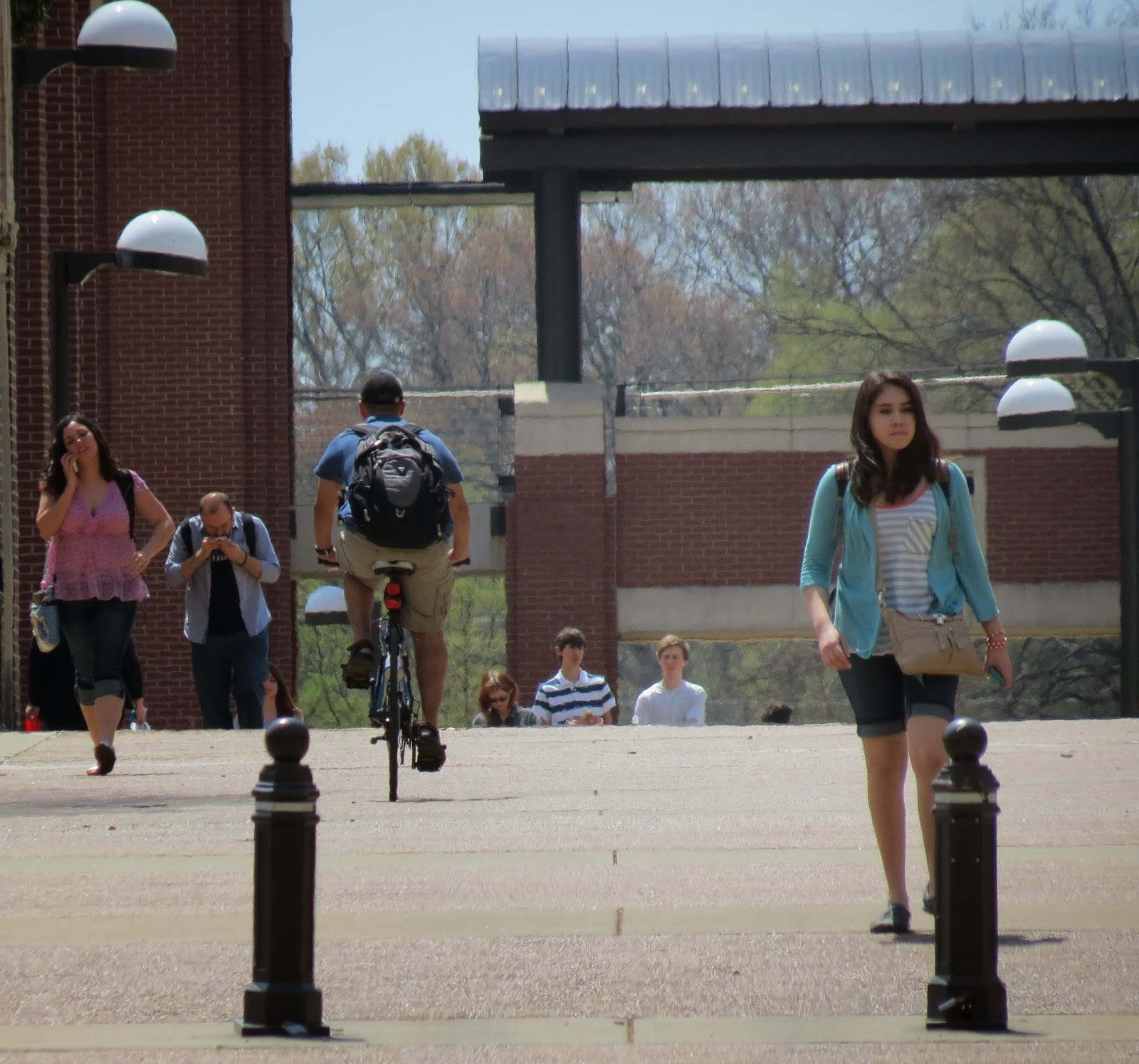
The University of Memphis has gotten involved in promoting cycling on its
campus by establishing a Tiger Bike Share Program and a Tiger Cycling Club
for U of M students, faculty, and employees.

For anyone who is willing and interested in parking their car and commuting by bicycle instead, here are a few simple suggestions for you to consider: 
(1)  Ride a bike that is simple, sturdy, and strong and doesn't have more on it than you need. 
(2)  Create a checklist of what you might need on your commute and after you reach your destination, (i.e., a cell phone, small plastic bags for items in case it rains, etc). 
(3)  Only carry what you need for the ride and whatever else you will want to have or wear after you reach your destination. 
(4)  Make sure that you have a way to clean up afterward. 
(5)  Always prepare in advance.  Know the route that you will take and be sure to check the weather forecast beforehand. 
(6)  Frequently check your brakes, tires and chain and carry any tools and other items that will enable you to fix a flat tire and make minor repairs. 
(7)  Have a way to secure and lock up your bike. 

For those who would like to know more, here is a list of websites that will be helpful to anyone wanting to commute by bicycle:  http://www.commutebybike.com/cats/commuting-101/ http://beginners.bicycling.com/beginners/commuting, http://www.wikihow.com/Commute-By-Bicycle, and http://www.biketoworkmemphis.com/.

Even though Americans have had a love affair with the automobile for decades, times are beginning to change.  Memphis is on the precipice and is ready to take the leap into the future. 

We may be behind some other cities in recognizing and promoting cycling and walking, but with plans like MPO's Regional Bicycle & Pedestrian Plan, we will be quickly joining the ranks of other progressive-minded cities in the nation who have already realized the value and many benefits of non-motorized ways of getting around town.

Even though we may not be the first city to take the lead in this, for those of us who want to see what is best for the city and its residents, we can at least take some solace in knowing that it is always better late than never.

Tuesday, October 7, 2014

Fall is a great time of the year for riding bikes in Memphis

Fall is a great time of the year for riding bikes in Memphis
By:  Michael Lander


Main Street in downtown Memphis is just one of many places in the city
where you can see some beautiful leaves in the fall.  As you can see from
this picture of a Memphis City Police Officer, however, it can be a very
chilly time to ride your bike too.

It's almost always a good time to ride a bike, but it is especially nice to take a bike ride around Memphis in the fall. 

In our part of the world, and for the rest of the Northern Hemisphere for that matter, fall officially begins with the Autumnal equinox on September 22 or 23 and it ends on the Winter solstice on December 21 or 22, but the weather here does not always necessarily coincide with what the calendar might show.

Those who have been around Memphis for very long know that the weather here, especially in the fall, can be as unpredictable and as uncertain as the stock market or a slot machine in a nearby Tunica casino.

As volatile as the weather might seem to be, however, the one thing that makes the fall season a lot more enticing for cyclists are the much cooler temperatures that we have this time of year.  

From average high temperatures ranging from 88 to 91 degrees, and heat indexes that can exceed 100 degrees throughout summer months, the Memphis area sees a lot more tolerable weather for cyclists with a lot less heat and humidity by the time that the fall season finally rolls around.

The bike trails in and around the city of Memphis are some ideal locations, not only to
ride, but to take in some of the fall colors.  Mid-to-late October is the time when
the area usually sees its peak period for fall foliage.

As in the spring, the cooler temperatures in the fall can make bike-riding a whole lot more pleasurable than ever and anyone who is inclined to ride really should not miss the chance to seize the opportunity to take their bikes out and resist the temptation of putting them away too early for winter. 

The average high temperature in September is 84 degrees, October is even cooler with an average high of 74, and November is often the harbinger of things to come with frost and chilly temperatures and average highs of 62 degrees and lows hovering around 42.

For those who endure the heat of summer, the cool, crisp autumn air can be a welcoming change as can be the change of scenery. 

Beginning in late September and early October, the landscape seems to come alive with leaves changing colors to beautiful shades of orange, red, and yellow with pumpkins, corn stalks, and a wide array of decor celebrating everything that is scary at Halloween to all those things that we have come to associate with, and appreciate about, Thanksgiving. 

There are very few better ways to enjoy fall than on a bicycle.  Not only can you see
some of the beautiful colors, but you can breathe in some crisp, autumn air and
get some really great exercise, all at the same time.

From the smell of wood-burning fireplaces to the distinctive scent of musty, wet leaves and spent vegetation to the sound of rustling leaves and the crackling sound of the old-dried up leaves as you run over them, there is something very special about riding a bike this time of year.  It can be as much of a treat, (and better for you), than anything that may be offered to you on Halloween. 

Even though there is so much to experience and to love about the fall, there is little else that can compare to the beauty of the leaves in all their magnificent glory.  With bright and bold colors like you might find on an artist's painted canvas, there is hardly anything that is any prettier, at least for the moment, in all of nature. 

Riding a bike and seeing and experiencing this as it unfolds before you can truly envelop you and make you feel more a part of your surroundings than ever.  If you take the time to enjoy this, and there is no better way to do that than on a bike, you can truly appreciate the momentary beauty before everything fades, withers, and gives way to winter.

There is only a small window in time to be able to see and enjoy the fall colors
and it's often the last chance for cyclists to get out and ride before the really
cold temperatures of winter set in.

Some of the best places to see the beautiful fall foliage in Memphis are on Riverside Drive and on Main Street, but there are plenty of other like Shelby Forest, Overton Park, Shelby Farms, and the various greenlines and greenways, not to mention many neighborhoods from midtown and beyond.  If you venture further out from the city, you will also find other great locations to see the fall leaves, like in middle to east Tennessee, north toward Kentucky, south around northern Mississippi, and in the Ozarks in western Arkansas.

Even though other cities may have more trees than Memphis does, the city does have a significant number and variety of trees and an extensive canopy of trees that can be seen from the air. 

This year, the city of Memphis received the "Tree City USA," designation from the Arbor Day Foundation and this should mean that Memphis area residents, visitors, and cyclists should have even more beautiful fall leaves to look at and appreciate in the years ahead.

For information on the peak season for fall foliage in the Southeast, here is a link to an article by Sheridan Alexander at http://gosoutheast.about.com.  For information on how to get started in a fall cycling program, you might want to visit the Rodale website.